Scientist, Explorer |

| Monday | 
|
| Tuesday |
|
| Wednesday |
|
| Thursday |
|
| Friday |


|
| Saturday |
|
| Sunday |
|
 |
F/A-22 Raptor |
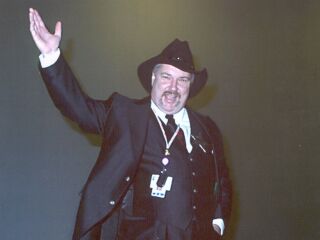 |
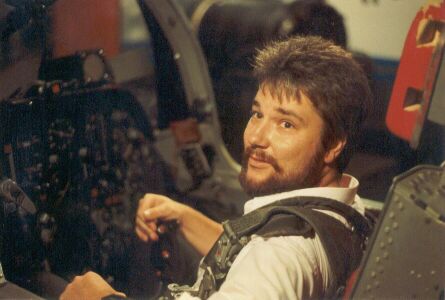
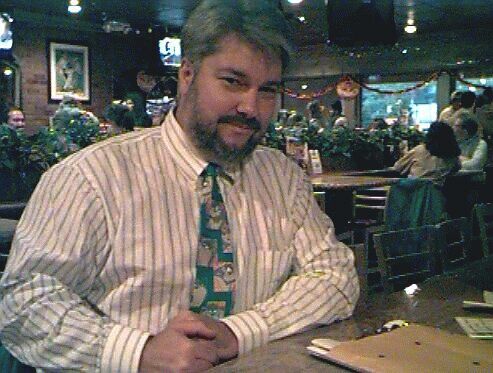
Either I am a Renaissance Man or a Jackass-of-all-Trades depending on how you look at it. I've had jobs in digital design, robotics, lasers, electronic warfare, oceanography, aircraft experimental flight testing, and telecommunications, as well as roofing, landscaping, farm laborer, ditch digger and crew on a freighter.
I currently work for Lockheed Martin Aeronautical Systems (LMAS) in Marietta, GA. Designing the next generation Avionics for the F-22 Raptor. Its a sexy airplane, Lockheed Martin web pages say everything that can be told about the aircraft. Press release about F-22 Avionics from Raytheon, a major subcontractor.
I just completed an assignment designing communications systems for a new transport aircraft, the C-27J Spartan, derived from the Alenia G-222 in a joint venture between Lockheed and Alenia Aerospazio in Italy.
First Flight of a C-27J Spartan protptype with its new propulsion system was in Turin, Italy, on September 27, 1999, at 09:21 EST, with Gianluca Evangelisti, Alenia Aerospazio Chief Test Pilot for Transport Aircraft, and Agostino Frediani, co-pilot, at the controls. The Spartan flew to 15000 ft for flutter and assymetric thrust tests, and landed at 10:50 EST, no major aircraft squawks were reported.
Avionics for the Spartan were developed in three stages: Block 1 was for development, Block 2 for civil certification, and Block 3 for Military Qualification. Software for the Comm Nav Ident Managment System (CNI-MS) from Honeywell could not include communications in time for Block 1, so I modified my systems for stand-alone operation in Block 1.
First Flight of a Spartan with Block 1 avionics was in Turin, Italy, on MMM DD, YYYY, no major aircraft squawks were reported. Nate Tilson was the flight line duty engineer in Italy leading up to Block 1 first flight.
First Flight of a Spartan with Block 2 avionics was in Turin, Italy, on MMM DD, YYYY. Since Honeywell missed having COMM software for Block 1, Block 2 became both my "development" and my "certification" which worried me a bit. I was the flight line duty engineer in Italy, representing all of Avionics IPT (Integrated Product Team) and Software IPT for the final integration and testing in the months leading up to Block 2 first flight, which allowed me to personally supervise the conversion of COMM from stand-alone to integrated, and to conduct through ground tests. Furthermore, this particular prototype had not flown in Block 1, and our plan was to skip ahead directly to the unproven Block 2 for first flight, thereby recovering some schedule. The last night before the aircraft was taken away for first flight prep, three avionics systems still had failures and tests were incomplete. I went to Mr Russo, Alenia Flight Line Boss, and explained. Mr Russo has absolute authority on the Flight Line, and everything I needed began to appear miraculously. Block 2 avionics flew on schedule, the flight went well, and I returned to the USA for some R&R.
Civil Certification of Spartan with Block 2 avionics was granted at the Paris Air Show, on June 20, 2001.
Military Qualification of Spartan with Block 3 avionics is expected by the end of 2001.
You can view my Curriculum Vitae online, or you can download it in MS Word.
The oldest of three boys, William Ernest Payne was born in September 1959 in Key West, FL. We moved to Merritt Island, FL, where Dad became Launch Test Director for NASA's project Apollo. As a child I tinkered with anything mechanical or electrical, and built a crystal radio, yes, with a coil wound on a paper tube and a crystal. My hand near the coil changed the tuning, as my understanding of resonance grew I modified the crystal radio for shortwave.
As a high school student in 1975 I soldered together a kit of the worlds first microcomputer, the Altair 8800a, and learned some machine language programming. It had no keyboard or monitor, just banks of switches and lights, quite primitive compared to the Apples and IBMs of later years. But it had an almost magickal aura, somehow we knew this would grow into something BIG. Three older kids already in college, named Gates, Allen, and Davidoff, quit school and wrote a BASIC interpreter on paper tape which actually ran on the little Altair with its 2 MHz processor and 4 kB of RAM. About 2 years before IBM, Radio Shack announced a desktop computer, and I drew a cartoon of a skeleton drowned in a sea of desktop computers, including brands like "Kenmore" and "K-Mart". In the 1970s that was a hilariously funny. At Georgia Tech the upperclassmen called me Altair, which is better than what they called most of the other freshmen. I also made my first Tesla Coil, and terrorized my dorm mates.
My summer job was prototyping a huge 8 GB/sec DSP engine for the UK Nimrod program. There was no VLSI, it was made of 1500 amps of TTL. I met Dr John Weaver for the first time, and he hired me into his laser development lab. In the basement of my rented house I built lasers, learned welding, and rebuilt motorcycle engines. I took up sailing, and later skydiving. On sabbatical I rode my motorcycle all over N America three times and returned to school.
On graduation, I applied for every available job at Kennedy Space Center, but then the Challenger explosion put a stop to that. I ended up as a Flight Test Engineer for Lockheed, specializing in Avionics, then survived several rounds of layoffs by designing the ARTB, an Electronic Counter-Countermeasures (ECCM) flying laboratory aircraft. Finally got laid off anyway and went to work designing controls and software for industrial robots at Intram, then returned to Electromagnetics as the Senior Agency Engineer at Hayes Microcomputer (yes, the founders of the modem industry) and also in my new hobby, ham radio.
I bought a house and got married. Consulting work and night classes took up any extra time. Lockheed asked me back to be the technical lead for their Experimental Flight Test Ground Station. I made some custom equipment and special tests to help some of the prototype aircraft programs, and consequently got "borrowed" onto P-3 Orion, C-130J Hercules II and F-22 Raptor. The Hercules II program sent me to Patagonia to support Natural Icing tests over Antarctica. After surviving an accident and being stranded in the wilderness of Patagonia I was medevac home in a body cast. I got divorced.
Dr John Weaver, now C-27J Spartan Avionics Manager at Lockheed, hired me as an avionics designer on the C-27J Spartan with system responsibility. I was assigned to represent Avionics and Software on the flight line in Turin, Italy where we integrated, tested and flew three prototypes of the Spartan. At home I made tesla coils, microwave beacons, seismographs and a Newtonian telescope, and took up cooking, gardening and kayaking.
When the Spartan program ended in 2001 the F-22 Raptor program hired me back to help design the next generation of avionics.
In case you hyperlinked in from elsewhere, I'm a hardcore technogeek, the Altair Homepage has links to all my tekno stuff. Usually I keep pretty busy.
My midlife crisis started when I was about 18. I figgure I've got X amount of time in this world and Y amount of stuff I wanna see and do. Y > X, so I avoid wasting time on stuff I dont want or need. I save time by using things already made. For instance, I could buy a switch, a meter, and a chassis box, drill the holes and mount my homemade X-band square-law detector in it. I would much rather buy a cheap battery tester, throw away the guts and put my new guts in the box which already has a switch and meter mounted. Saves time, saves money.
I like to maintain and ride my 1971 Harley Sportster, go kayaking on lakes and streams, especially at night. I'm a night person. I enjoy skydiving, have logged a total of almost 100 miles in freefall, but I've not been recently. Other sports include hiking, sailing, spelunking, rock climbing and rappelling. I enjoy travel and dining.
Last year a hungry cat took up residence on my back deck, and soon started a volunteer cat farm by spewing kittens everywhere. Gotta fix that. ($$$) My garden supplies tomatoes, sweet basil, chives, onions, and potatoes. I dont use poison, just plant some for me and some for the bugs. Ladybugs help me out. Each summer I make dried tomatoes with basil and in the autumn I brew Hi Voltage Apple Cider.
 |
Altair Home
person.html, October 2001, Copyright © 1999, 2001, Altair. EMail altair@altair.org |